Menu

Menu

Menu

12 things to know about kombucha

12 things to know about kombucha

12 things to know about kombucha

‘A thousand-year-old drink deserves to have the time taken to get to know it.’

‘A thousand-year-old drink deserves to have the time taken to get to know it.’

‘A thousand-year-old drink deserves to have the time taken to get to know it.’

The benefits of kombucha, alcohol, sugar, the microbiota, Dry January. Everything we can say, and everything we won't say until the studies are clear.

What is kombucha?

01.

01.

01.

What is kombucha?

A drink produced from the fermentation of sweetened tea. Bacteria and yeast living in symbiosis, the SCOBY, transform the tea into a fizzy, tart beverage, rich in active ferments. No more complicated than that. No less fascinating either.

A drink produced from the fermentation of sweetened tea. Bacteria and yeast living in symbiosis, the SCOBY, transform the tea into a fizzy, tart beverage, rich in active ferments. No more complicated than that. No less fascinating either.

A drink produced from the fermentation of sweetened tea. Bacteria and yeast living in symbiosis, the SCOBY, transform the tea into a fizzy, tart beverage, rich in active ferments. No more complicated than that. No less fascinating either.

02.

02.

02.

Where it comes from, and who does the work

Where it comes from, and who does the work

Where it comes from, and who does the work

The first traces of kombucha date back more than 2,000 years, to Southeast Asia. Over the centuries, the drink travelled to Russia, Germany, and then the United States. In France, a few enthusiasts were already brewing it craft-style, but it remained largely unknown. In 2009, Karma was born, becoming one of the very first to brew and commercialise kombucha. It was the beginning of the French kombucha adventure on a larger scale.

The culture is the SCOBY: Symbiotic Culture of Bacteria and Yeast. Often mistakenly called a "mushroom". It is actually a symbiotic colony of bacteria and yeast, made of cellulose, just like trees. A living, organic mass, which we have carefully nurtured for over ten years in our Breton tanks.

03.

03.

03.

Fermentation, explained simply

Fermentation, explained simply

Fermentation, explained simply

We start by brewing organic tea in hot water, with cane sugar. Once the mixture has cooled, we add our SCOBY. For one to two weeks, at a controlled temperature, the magic happens.
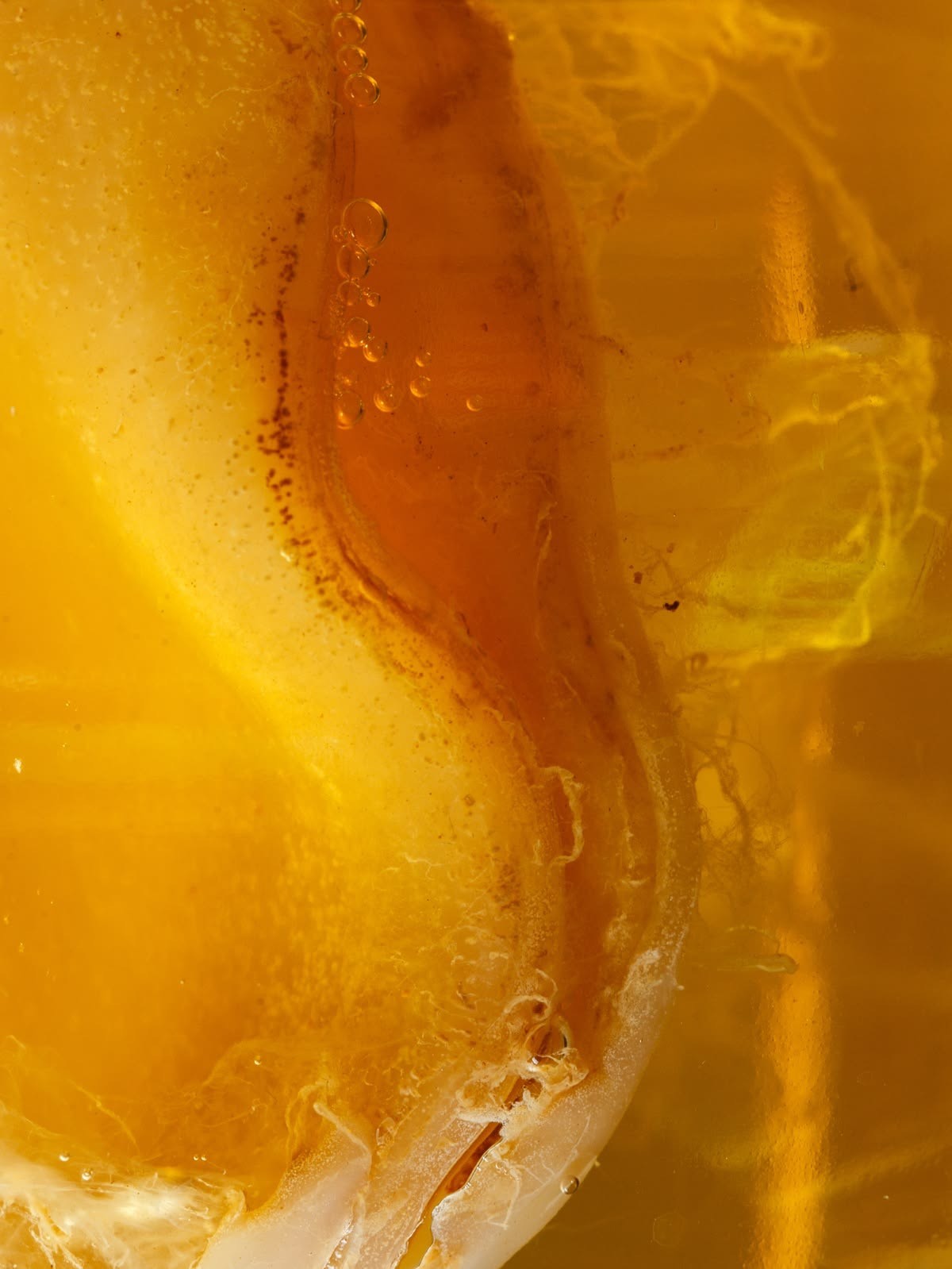
The yeasts convert the sugar into alcohol and the bacteria, in turn, convert the alcohol into organic acid. Fermentation creates billions of micro-organisms and Co2. No heating, no acceleration. Just time.

The yeasts convert the sugar into alcohol and the bacteria, in turn, convert the alcohol into organic acid. Fermentation creates billions of micro-organisms and Co2. No heating, no acceleration. Just time.

The yeasts convert the sugar into alcohol and the bacteria, in turn, convert the alcohol into organic acid. Fermentation creates billions of micro-organisms and Co2. No heating, no acceleration. Just time.

What is inside

04.

04.

04.

Very low alcohol, low sugar

Alcohol: fermentation produces very trace amounts, less than 1.2% ABV. This is the legal threshold for "alcohol-free" drinks in France, similar to kefir, sourdough bread, or very ripe fruit. Our kombucha is tested at an average of 0.6% ABV when leaving the workshop. We guarantee a level below 1.2% throughout the product's shelf life, in line with EU regulations.

Sugar: it is needed at the beginning to feed the SCOBY. But during fermentation, it consumes most of it. As a result, our Ginger Kombucha contains around 2.5 g of sugar per 100 ml, compared to 10.6 g for a classic fizzy drink.

4x less

4x less

4x less

Our Ginger Kombucha contains about 2.5 g of sugar per 100 ml, compared to 10.6 g per 100 ml for a Coca-Cola Original.

05.

05.

05.

Billions of active ferments, hundreds of strains

Billions of active ferments, hundreds of strains

Billions of active ferments, hundreds of strains

Unpasteurised kombucha contains billions of micro-organisms, lactobacilli, acetobacteria, and yeasts. They are the ones that did the work of fermentation, and that end up in your bottle. Alive, active, and Breton.

And our SCOBY is not a single strain: it is a community. Several hundred microbial strains coexist in our vats, each with its own role. It is this diversity that makes a slowly brewed kombucha so rich.

06.

06.

06.

Our commitments: 100% organic, Demeter, no added flavourings

Our commitments: 100% organic, Demeter, no added flavourings

Our commitments: 100% organic, Demeter, no added flavourings

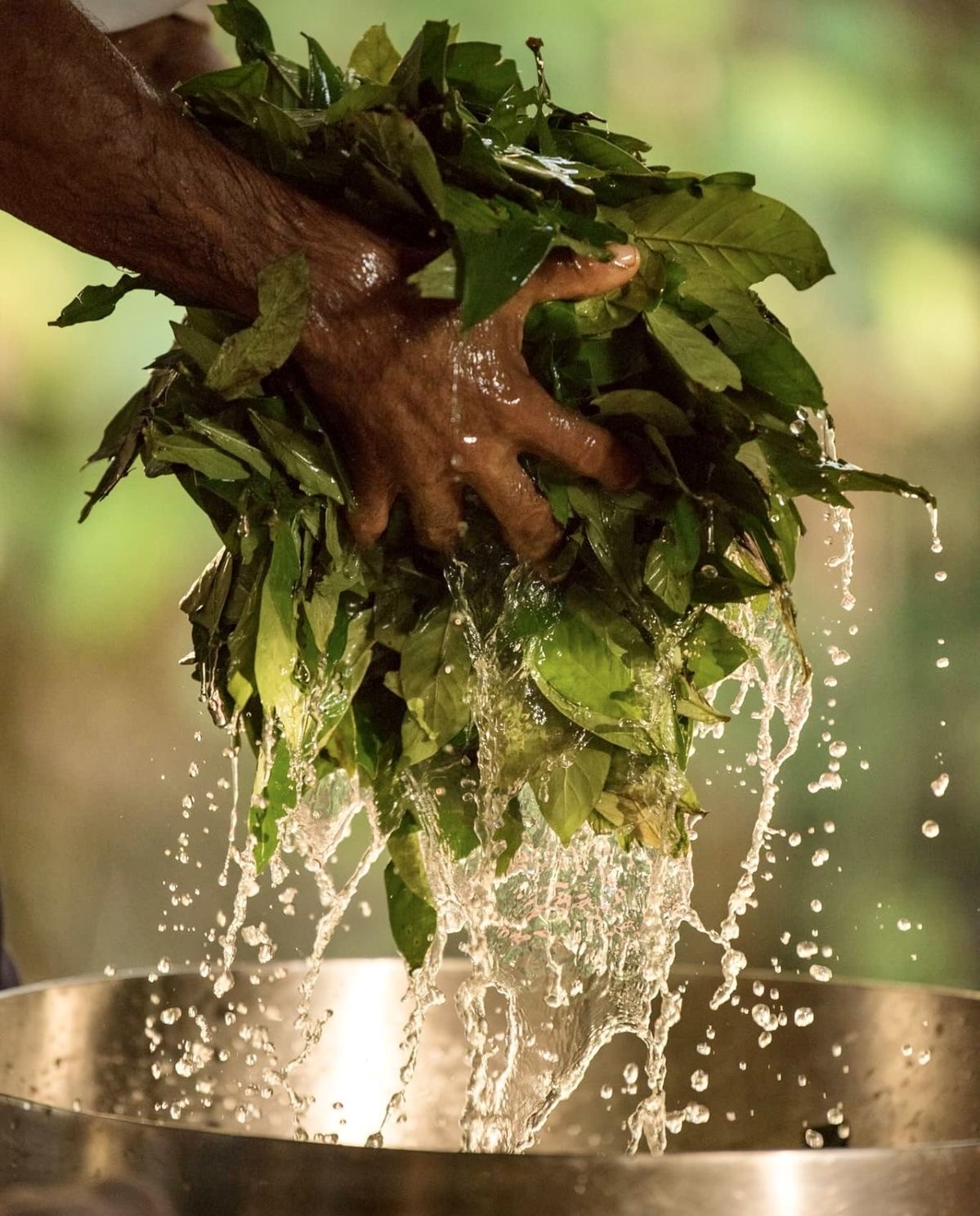
100% organic: because 95% is not enough for us.

The regulations (Regulation (EU) 2018/848) allow organic certification from

95% organic agricultural ingredients. At Karma, we go further: 100% of our agricultural ingredients are organic. No shortcuts, no compromises.

Demeter: our kombuchas are certified biodynamic. A demanding form of agriculture that follows the rhythms of life, the moon, the seasons, and the soil.

The living within you

07.

07.

07.

What exactly is the microbiota?

It is the collection of microorganisms: bacteria, fungi (which include yeasts and moulds) and viruses, that inhabit your digestive tract. A real population, and a very special one at that:

It is the collection of microorganisms: bacteria, fungi (which include yeasts and moulds) and viruses, that inhabit your digestive tract. A real population, and a very special one at that:

It is the collection of microorganisms: bacteria, fungi (which include yeasts and moulds) and viruses, that inhabit your digestive tract. A real population, and a very special one at that:

100 trillion

100 trillion

100 trillion

cells in your microbiome, which is nearly 3 times more than in your body.

70-80%

70-80%

70-80%

Immune cells are found in the gut.

200 m

200 m

200 m

Of neurons in the gut, a “second brain” in direct dialogue.

Like a fingerprint, your microbiota is unique. It evolves with age, diet, and lifestyle.

Like a fingerprint, your microbiota is unique. It evolves with age, diet, and lifestyle.

Like a fingerprint, your microbiota is unique. It evolves with age, diet, and lifestyle.

08.

08.

08.

Pasteurised or not, it changes everything

Pasteurised or not, it changes everything

Pasteurised or not, it changes everything

Pasteurisation means heating to stabilise and extend shelf life. It is convenient. It also means the end of live ferments.

Pasteurisation means heating to stabilise and extend shelf life. It is convenient. It also means the end of live ferments.

Pasteurisation means heating to stabilise and extend shelf life. It is convenient. It also means the end of live ferments.

We choose unpasteurised kombucha. It requires more demanding logistics and must be kept in the chiller cabinet, but it promises a living drink. That makes all the difference.

09.

09.

09.

What is the current status of the benefits on the microbiota?

Let’s be honest: science is advancing, but remains cautious. The majority of studies on the benefits of kombucha are in vitro or on animals, as a 2019 review points out. What is certain: its richness in organic acids and compounds derived from fermentation. The rest is observed without being promised.

→ Source: Kapp & Sumner, ‘Kombucha: a systematic review of the empirical evidence of human health benefit’, Annals of Epidemiology, 2019.

Kombucha in daily life

10.

10.

10.

An alternative to fizzy drinks, really?

An alternative to fizzy drinks, really?

An alternative to fizzy drinks, really?

Four times less sugar, just as much fizz and character, with the added benefit of live ferments. Yes, you can swap your fizzy drink for a kombucha: the same pleasure, the same bubbles, with all the added benefits of a live drink.

Four times less sugar, just as much fizz and character, with the added benefit of live ferments. Yes, you can swap your fizzy drink for a kombucha: the same pleasure, the same bubbles, with all the added benefits of a live drink.

Four times less sugar, just as much fizz and character, with the added benefit of live ferments. Yes, you can swap your fizzy drink for a kombucha: the same pleasure, the same bubbles, with all the added benefits of a live drink.

3 m

3 m

3 m

French people drink kombucha regularly in 2024.

11.

11.

11.

Why Dry January suits us so well

In January, millions of people put alcohol aside. And look for alternatives that have taste and character. Kombucha ticks the boxes: alcohol-free, bubbly, and with a real taste identity. At KARMA, we support the movement every year.

In January, millions of people put alcohol aside. And look for alternatives that have taste and character. Kombucha ticks the boxes: alcohol-free, bubbly, and with a real taste identity. At KARMA, we support the movement every year.

In January, millions of people put alcohol aside. And look for alternatives that have taste and character. Kombucha ticks the boxes: alcohol-free, bubbly, and with a real taste identity. At KARMA, we support the movement every year.

4.5M

4.5M

4.5M

of French people participated in Dry January in 2024. 44% plan to do so in 2026. Source: Observatoire Chavin & CSA.

Good to know

12.

12.

12.

Pregnancy, children, treatments: what you need to know

Pregnancy, children, treatments: what you need to know

Pregnancy, children, treatments: what you need to know

Naturally fermented, kombucha may contain slight traces of alcohol, while remaining classified as a non-alcoholic beverage according to European and French regulations (less than 1.2% ABV: the legal threshold that qualifies a beverage as "non-alcoholic" in France and the EU, INCO Regulation 1169/2011).


For pregnant or breastfeeding women, or young children, everyone is free to make their own choices with this information in mind. At KARMA, we choose total transparency by including the mention "may contain traces of alcohol" on our labels. 


By way of comparison, overripe fruit or certain artisanal fruit juices can also naturally contain traces of alcohol due to fermentation. 

Our sources

Our sources

Our sources

Because we cite when we assert.

Because we cite when we assert.

Because we cite when we assert.

→

Kapp & Sumner, ‘Kombucha: a systematic review of the empirical evidence of human health benefit’, Annals of Epidemiology, vol. 30, 2019.

→

Chavin Observatory & CSA, "The French Relationship with Dry January", December 2025.

→

INSEE, "Household spending on beverages since 1960", 2020.

→

INSERM, “Gut microbiota: a key player in our health”, scientific dossier.

→

Nutripure, "Kombucha: benefits and complete guide", May 2025.

So, that's everything

So, that's everything

So, that's everything

Now that you know, all that is left is to find your flavour.

Now that you know, all that is left is to find your flavour.

Now that you know, all that is left is to find your flavour.

Our purpose

Nourishing the body and mind mindfully

KARMA, created in 2009 by Biogroupe, puts life back at the heart of our food. In the workshop, kombucha, water kefir, ginger beer and lemonade are brewed in small batches using traditional artisanal craftsmanship.

© 2026 KARMA. All rights reserved.

Our purpose

Nourishing the body and mind mindfully

KARMA, created in 2009 by Biogroupe, puts life back at the heart of our food. In the workshop, kombucha, water kefir, ginger beer and lemonade are brewed in small batches using traditional artisanal craftsmanship.

© 2026 KARMA. All rights reserved.